
If you are craving a travel experience that transitions seamlessly from vibrant café culture to raw, untouched alpine wilderness, a journey through Gangtok and North Sikkim is unparalleled. While Gangtok offers an organized, culturally rich mountain city experience, North Sikkim takes you to the literal edge of civilization with its dramatic glaciers and snow-capped peaks. Together, they form the ultimate Himalayan itinerary.
Here is why this combination deserves a top spot on your bucket list.
1. Gangtok: The Perfect, Clean Urban Escape
Your journey begins in Gangtok, the capital of Sikkim. Unlike many crowded hill stations, Gangtok is remarkably clean, eco-conscious, and smoke-free. The heart of the city, MG Marg, is a pedestrian-only avenue lined with vibrant shops, boutique cafes, and independent music bars. It serves as the perfect base camp where you can enjoy world-class Tibetan food, ride the scenic scenic ropeway, and explore ancient Buddhist sites like Rumtek Monastery before heading into the wild.
2. The Surrounding High-Altitude Wonders
Just a short drive out of Gangtok lies the famous Tsomgo (Changu) Lake, a glacial body of water tucked tightly inside steep mountain walls. Combined with a visit to the historic Nathu La Pass on the Indo-China border, this region offers your first taste of thin air, rugged military terrain, and dramatic mountain roads that trace the ancient Silk Route.

3. North Sikkim: Entering the Realm of Giants
As you leave Gangtok and drive north toward Lachen and Lachung, the landscape changes dramatically. Forests give way to massive, cascading waterfalls like Amitabh Bachchan Falls, and the hills grow into towering rock faces. North Sikkim is raw, rugged, and intensely beautiful. It is an area where nature rules entirely, offering a humbling sense of isolation that you cannot find in commercial tourist towns.
4. Gurudongmar Lake and Yumthang Valley
North Sikkim holds two of the most spectacular natural wonders in Asia:
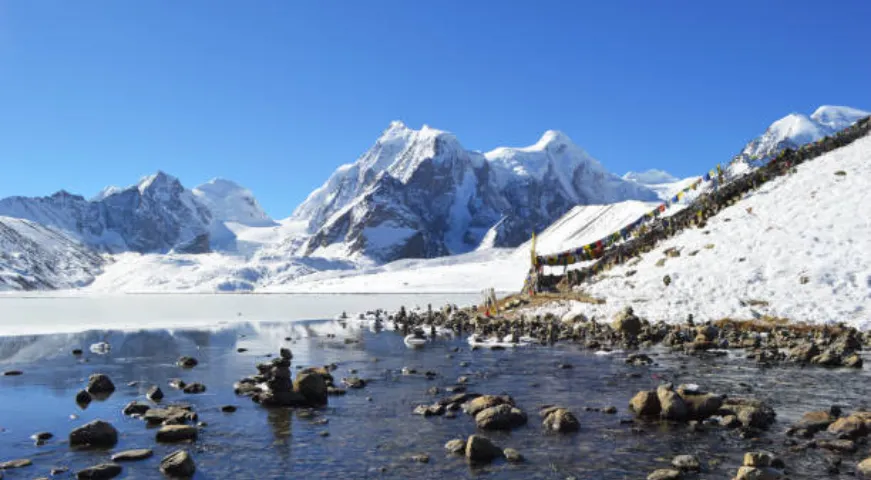
- Gurudongmar Lake (17,800 ft): One of the highest lakes in the world, its crystal-blue water is surrounded by completely barren, cold-desert mountains. It is a deeply sacred place where a portion of the water famously never freezes, even in dead winter.
- Yumthang Valley: Known as the “Valley of Flowers,” this alpine paradise is framed by pine forests and hot springs. In spring, the entire valley floors erupt into a vibrant carpet of rhododendrons and primulas.
5. Pure Cultural Immersion
Traveling through the remote villages of Lachen and Lachung gives you a rare look into the lifestyle of the local Dzumsa system—a unique form of self-governance practiced by the high-altitude residents. The hospitality in these mountain homestays, where you can sit by a wood-fired stove drinking warm local tea while the snow falls outside, is incredibly moving.
The Verdict: Gangtok feeds your comfort and soul, while North Sikkim challenges and excites your inner adventurer. It is a journey of extreme contrasts—from concrete European-style avenues to high-altitude glacial deserts.
Pack your heaviest woolens, secure your travel permits, and prepare for an unforgettable voyage to the roof of India!
📋 The Ultimate 5-Day Gangtok & North Sikkim Itinerary
| Day | Destination | Major Highlights | Altitude Level |
| Day 1 | Gangtok | Scenic Teesta River drive, Evening at MG Marg | 5,500 ft |
| Day 2 | Lachen | Seven Sisters Waterfall, Naga Falls, Mountain homestay | 8,838 ft |
| Day 3 | Gurudongmar & Lachung | High-altitude blue lake, Thangu Valley, Lachung Monastery | 17,800 ft (Lake) |
| Day 4 | Yumthang & Gangtok | Valley of Flowers, Zero Point snow fields, Return drive | 15,300 ft (Zero Pt) |
| Day 5 | Departure | Souvenir shopping at Lal Bazaar, Drive back to plains | Return to sea level |

